
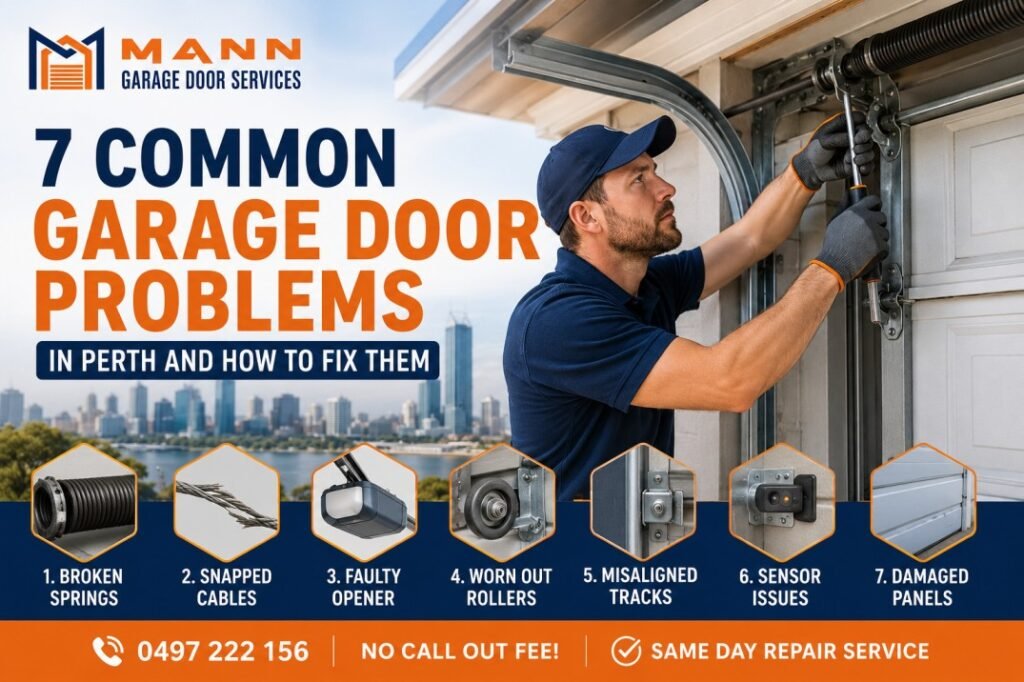
A garage door is one of the hardest-working parts of any Perth home. It opens and closes multiple times a day, carries significant weight, and is constantly exposed to Perth’s hot summers, dry winds, and occasional heavy winter downpours. Over time, this daily wear combined with our local climate can lead to a range of mechanical and electrical issues.
The good news is that most garage door problems give off early warning signs. A slight delay in response, an unusual noise, or a door that moves a little unevenly can all indicate a developing fault. Addressing these small issues early not only keeps your garage door safe and reliable, but can also help you avoid more expensive repairs down the track.
Below, we’ve outlined seven of the most common garage door problems Perth homeowners experience, what typically causes them, and what you can safely check yourself before calling in a professional.
1. Garage Door Won’t Open or Close
This is one of the most frequent issues reported by homeowners, and it can stem from several different causes.
Common reasons include:
- Remote control issues – flat batteries, a remote that’s out of range, or a remote that has lost its connection to the opener
- Power interruptions – a tripped circuit, unplugged opener, or power outage
- Sensor misalignment – safety sensors near the base of the door that have been bumped out of position
- Mechanical faults – worn cables, damaged rollers, or an obstructed track
Before assuming the worst, there are a few simple checks you can do yourself. Try replacing the remote batteries, check that the opener is plugged in and receiving power, and look at the two small sensors on either side of the door near the floor to make sure nothing is blocking the light between them and that they’re pointing directly at each other.
If these basic checks don’t resolve the issue, the fault is likely mechanical or electrical and will need a professional assessment.
2. Broken or Worn Garage Door Springs
Garage door springs carry the full weight of the door, working in tension or torsion to make lifting and lowering smooth and manageable. Without properly functioning springs, a standard garage door can weigh well over 100 kilograms, making it extremely difficult and dangerous to operate manually.
Common warning signs of a failing spring include:
- A loud bang coming from the garage (often the sound of a spring snapping)
- The door feeling unusually heavy when lifted manually
- The door opening unevenly or at an angle
- Visible gaps or separation in the spring coils
Garage door springs are under extremely high tension, and attempting to repair or replace them without the correct tools and training can result in serious injury. This is one repair that should always be left to a qualified technician, both for your safety and to ensure the replacement spring is correctly matched to your door’s weight and size.
3. Garage Door Comes Off Its Tracks
A garage door that has come off its tracks is a serious issue and shouldn’t be operated until it’s assessed. This problem is often caused by:
- A bent or damaged track, sometimes from an accidental vehicle bump
- Worn or broken rollers
- Loose track hardware
- Obstructions along the track’s path
You may notice the door sitting unevenly, grinding noises during operation, or visible gaps between the rollers and the track. It can be tempting to try to guide the door back into position, but forcing a misaligned door can bend the track further, damage the panels, or cause the door to fall unexpectedly. If you notice your door has come off its tracks, it’s best to stop using the door and arrange a professional inspection.
4. Noisy or Squeaking Garage Door
A certain amount of operational noise is normal, but grinding, squeaking, or rattling sounds usually indicate that something needs attention. Common causes include:
- Worn or dry rollers and hinges
- Loose nuts, bolts, or brackets
- Lack of regular lubrication
- General wear from age and frequent use
Many noise issues can be reduced with basic maintenance. Applying a silicone-based lubricant to rollers, hinges, and springs every few months, and periodically checking that visible hardware is tightened, can make a noticeable difference. If the noise persists after basic maintenance, or if it’s accompanied by jerky movement, it’s worth arranging a professional service to check for worn components that need replacing.
5. Garage Door Motor or Opener Problems
The motor, or opener, is the part of the system that automates the lifting and lowering of your door. When it starts to fail, you might notice:
- Unusual grinding, clicking, or humming noises
- The opener running but the door not moving
- Intermittent operation, where the door sometimes works and sometimes doesn’t
- The remote control failing to communicate with the unit
Opener issues can come from ageing components, electrical faults, worn gears, or programming problems following a power outage. Because openers combine electrical and mechanical parts, diagnosing the exact fault usually requires some technical know-how. If restarting the opener or replacing the remote batteries doesn’t help, a professional garage door opener repair is generally the most reliable path forward.
6. Garage Door Stops Halfway
A door that stops partway through opening or closing is a common and often confusing problem. Potential causes include:
- An obstruction in the door’s path, such as debris or an object on the track
- Sensors that are dirty, misaligned, or blocked
- A spring that’s beginning to fail, changing the balance of the door
- Resistance or a blockage somewhere along the track
- Opener settings, such as the travel limit, being incorrectly set
Start by checking the sensors and clearing anything from the door’s path. If the door still won’t complete its cycle, the issue could be related to spring tension or opener settings, both of which are best diagnosed by a technician to avoid causing further strain on the system.
7. Garage Door Remote or Sensor Problems
Remote and sensor issues are usually straightforward but can be frustrating when they interrupt your daily routine. Common culprits include:
- Flat or low remote batteries
- Sensors that have shifted out of alignment, often after being knocked
- Dirt, cobwebs, or sunlight interference affecting the sensor’s signal
- Interference from other electronic devices
Cleaning the sensor lenses, checking their alignment, and replacing remote batteries will resolve the issue in many cases. If problems continue after these checks, it may point to a fault within the opener’s circuit board or receiver, which will need professional diagnosis.
When Should You Call a Garage Door Repair Professional?
While some garage door issues can be safely checked and resolved by homeowners, others carry real safety risks and are best left to trained technicians. You should avoid attempting to repair the following yourself:
- Springs – under extreme tension and capable of causing serious injury if mishandled
- Cables – often under tension and can snap unexpectedly
- Heavy mechanical components – including drums, rollers, and track assemblies
- Structural or panel damage – particularly on doors that are off-balance or off their tracks
- Opener electronics – circuit boards and wiring that require specific technical knowledge
If your garage door is making unusual noises, moving unevenly, showing signs of wear, or simply not responding the way it should, it’s worth arranging a professional inspection. For homeowners across Perth, a trusted garage door repair Perth service can properly diagnose the issue and carry out a safe, lasting repair.
Frequently Asked Questions
What are the most common garage door problems in Perth?
The most common issues include doors that won’t open or close, broken or worn springs, doors coming off their tracks, noisy operation, opener or motor faults, doors stopping halfway, and remote or sensor problems.
Why won’t my garage door open?
This can be caused by flat remote batteries, a power interruption, misaligned safety sensors, or a mechanical fault such as a broken spring or cable. Checking the remote and sensors first can often identify simple fixes.
How do I know if my garage door spring is broken?
Signs include a loud bang from the garage, the door feeling unusually heavy, uneven movement, or visible gaps in the spring coils. If you suspect a broken spring, avoid operating the door and contact a professional.
Why is my garage door making a loud noise?
Noise is often caused by worn rollers or hinges, loose hardware, or a lack of lubrication. Regular maintenance can reduce noise, but persistent grinding or rattling may indicate parts that need replacing.
Why does my garage door stop halfway?
This is usually related to an obstruction, dirty or misaligned sensors, incorrect opener settings, or developing spring issues. Clearing the path and checking sensors is a good first step.
Can I repair a garage door myself?
Some basic checks, such as replacing batteries, cleaning sensors, and lubricating moving parts, are safe for homeowners to do. However, spring, cable, and major mechanical repairs should always be handled by a trained professional due to the risk of injury.
When should I call a garage door repair professional?
If your door isn’t responding to basic troubleshooting, is making unusual noises, has come off its tracks, or shows any signs of spring or cable damage, it’s time to call a professional for a proper inspection and repair.
